Your family, drawn as it is.
If someone in your story uses a wheelchair, hearing aids or a walking frame, it belongs in the pictures — on every page, the same way their hair and their favourite jumper do. Here is exactly what we can draw today, and what we can't yet.
What we draw
The rule is simple: if it is something a person uses, we draw it every time they appear — in the story, on the cover, all the way through.
- A wheelchair
Manual or powered, on every page they appear.
- Hearing aids or a cochlear implant
Drawn at the ear, as ordinary as a pair of glasses.
- A walking frame or rollator
Including the ones grandparents use.
- A cane or crutches
When they are part of everyday life, not a few weeks after a sprain.
- A feeding tube
Drawn plainly, never as a medical illustration.
- A leg brace or a prosthetic limb
Part of how they stand and move.
- Glasses
These already carry through from the photo on their own.
Four pages from one real book
Joni's arm is in all four — at the gate, on the walk home, kneeling down to listen, in the sandpit — the way it is on every other page of the book. Not one of those pages is about it.
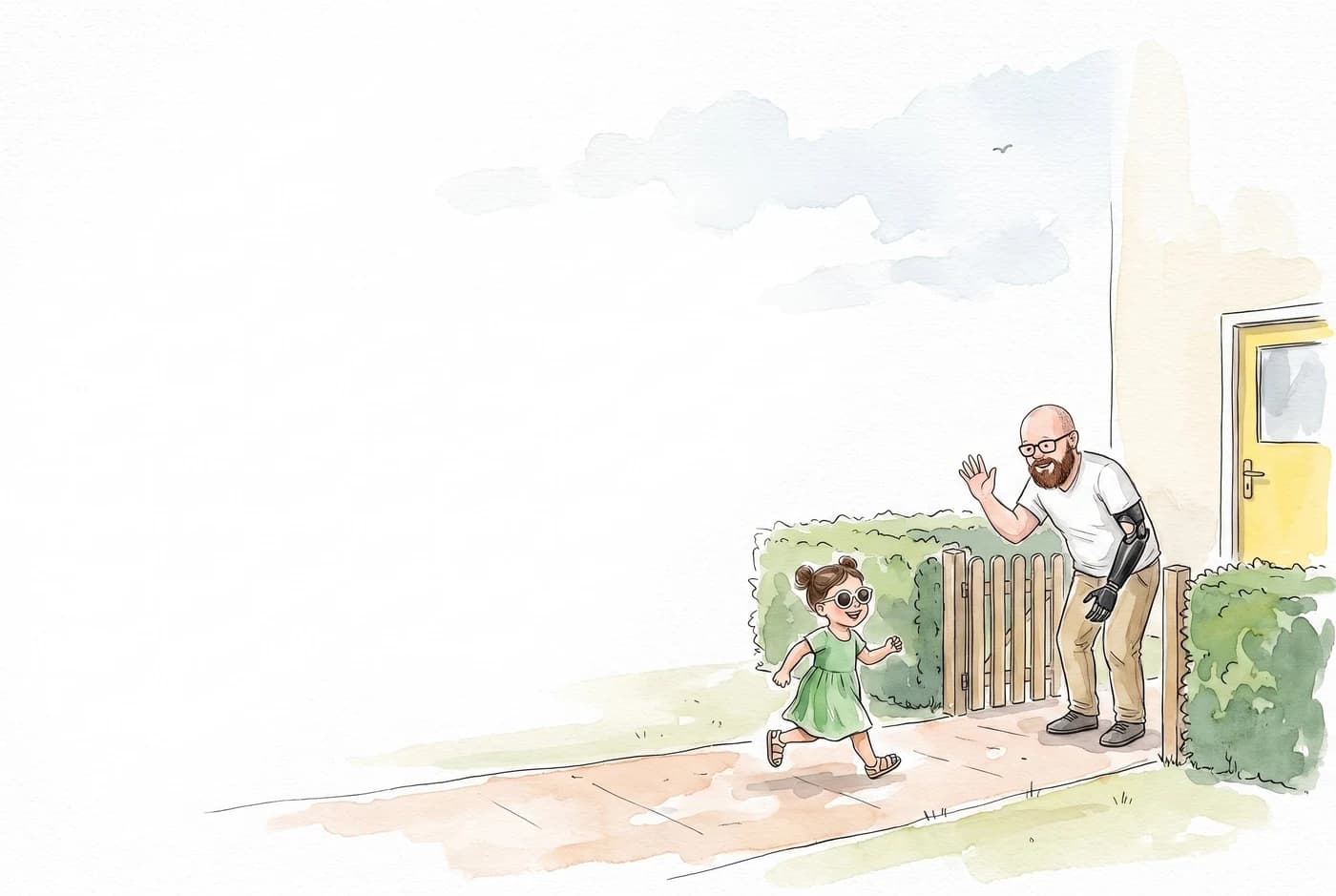
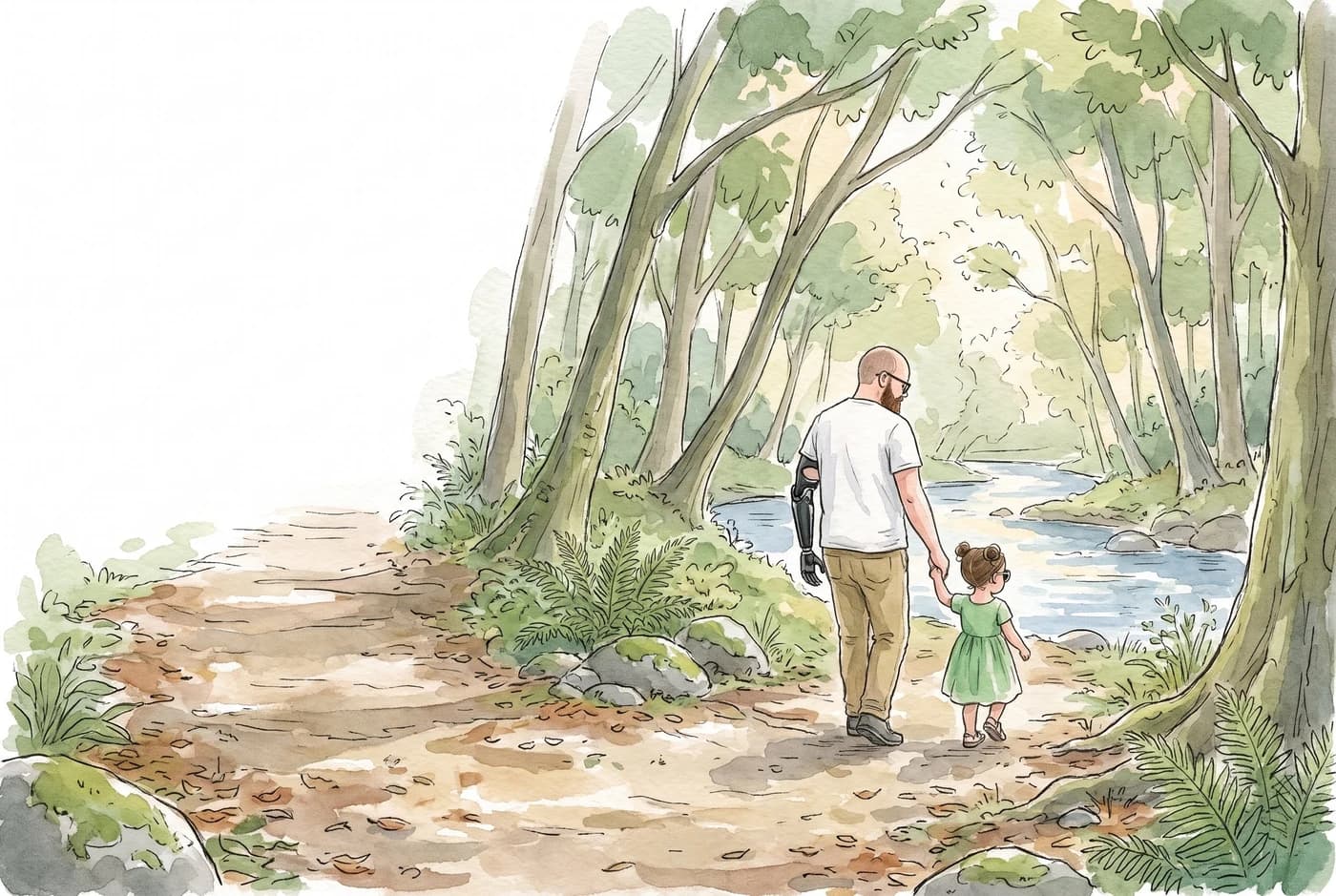
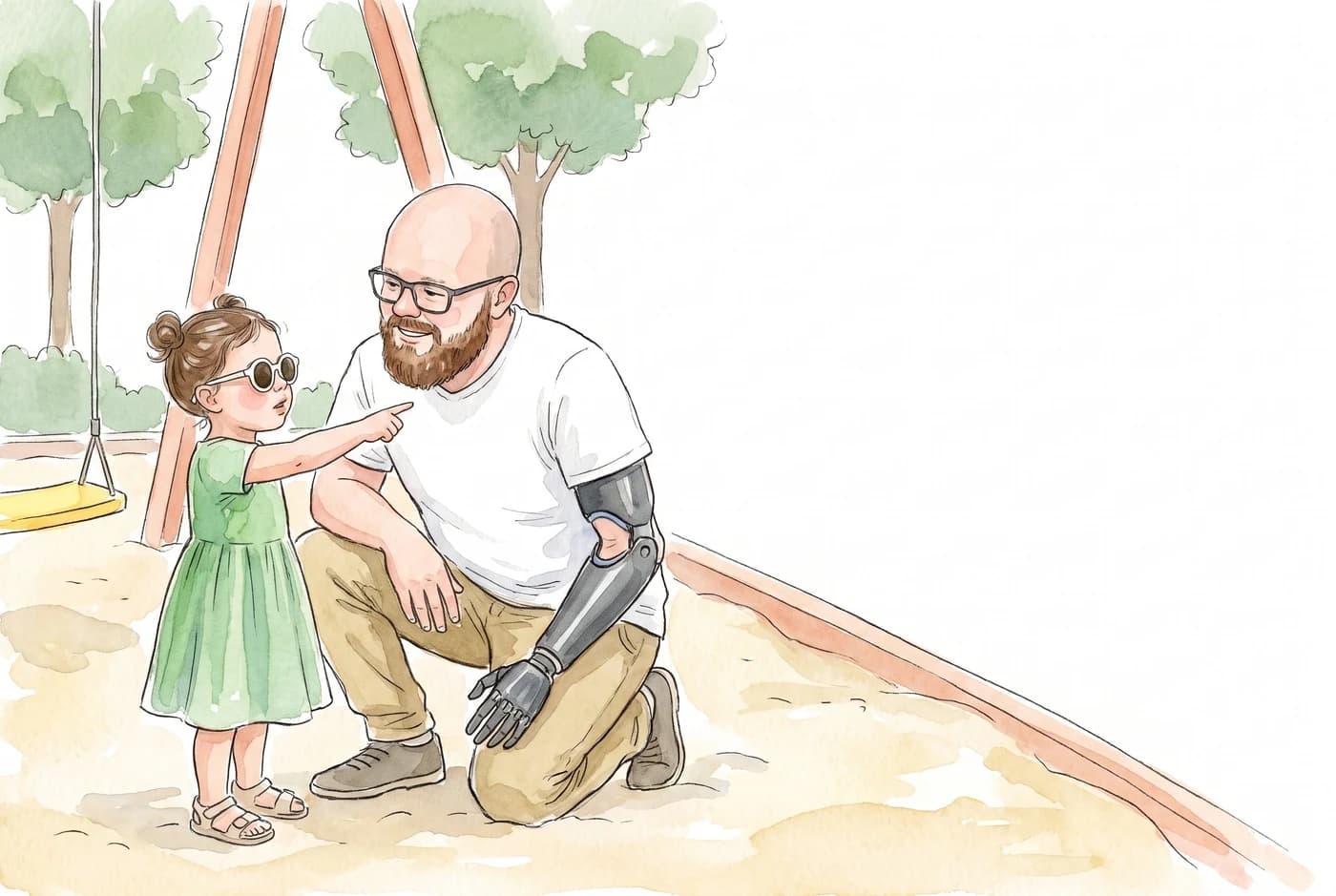
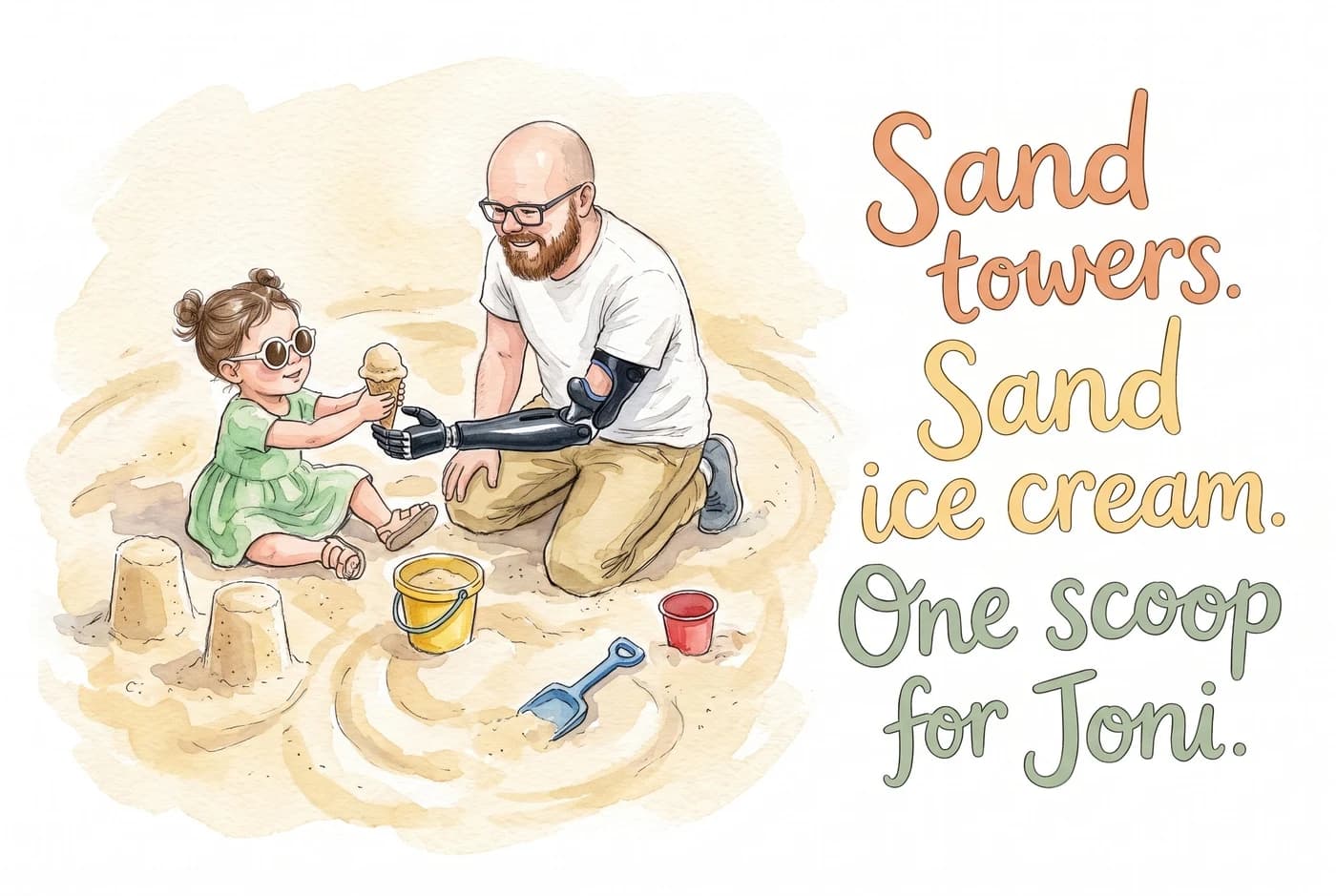
From Lara & Joni: Noon Adventures — a book out of our own family, not a mock-up.
How to tell us
Just say it in the chat
Just as you would to a person: “Grandpa uses a wheelchair”, “our daughter wears hearing aids”. There is no form to fill in and no box to tick.
Either way, you will see it listed with your characters before we start — and you can take it off if we have got it wrong.
It stays a story about the day at the beach
We draw it always. We only write about it if you did. If your story is about a Saturday at the duck pond, that is the book you get — her wheelchair is simply in the pictures, the way it is simply in her life.
No book about being brave. No book about overcoming anything. Unless that is the book you asked for, in which case it is yours to ask for.
What we can't do yet
We would rather tell you plainly than let you find out when the book arrives.
Down syndrome, a facial difference, a limb difference. We are not able to draw these faithfully yet — the drawing tends to soften a face back toward an average one, and we would rather draw nothing than draw a caricature of your child. If you tell us anyway, we keep it, so that when we can do it properly we will know.
A cast, a bandage, crutches after a sprain. We leave these out on purpose: drawing them on every page would put a cast on the page where the arm has healed. Write them into your story and they will appear where they belong.
Autism, a heart condition, a hearing loss without aids. There is nothing for an illustrator to draw — but it can absolutely shape the story you tell us, and it should.
If we get it wrong
You see the whole book before you order anything. If a page isn't right, you can redo it. If it still isn't right, write to us and we will fix it or refund the preview — we would rather do that than send you a book that doesn't look like your family.
Talk to us first if you're unsure